How to Fix Bathroom Inter-Floor Ceiling Leaks in Shah Alam: Engineering & Strata Act 757 Guide
Comprehensive engineering guide to diagnosing upper-floor bathroom slab water seepage, Strata Management Act Form 28 protocols, and non-destructive PU injection grouting in Shah Alam.
Emergency Engineering Guide: Shah Alam Reticulation
Waking up to yellow water rings, peeling paint, or active water droplets dripping from your ground-floor plaster ceiling is an alarming experience for any property owner in Shah Alam. In mature double-storey terraces across Seksyen 7, Bukit Jelutong, and Denai Alam, as well as high-rise strata condominiums throughout Seksyen 13, Setia City, and Glenmarie, inter-floor ceiling water seepage represents one of the most contentious, costly, and technically misunderstood plumbing challenges.
When water penetrates through a reinforced concrete floor slab, it doesn’t just destroy plasterboard ceilings and kitchen cabinetry below. Over time, moisture reacts with free lime in the concrete, triggering calcium carbonate leaching (efflorescence stalactites), rusting embedded steel reinforcement rebars (causing destructive concrete spalling or “concrete cancer”), and creating toxic black mold colonies inside ceiling cavities.
In this comprehensive technical guide, our experienced sanitary engineers explain how to definitively diagnose whether a ceiling leak stems from a pressurized water pipe versus a failed waterproofing membrane, examine the statutory legal framework governing strata disputes under the Strata Management Act 2013 (Act 757), and evaluate modern minimally disruptive remediation technologies like High-Pressure Polyurethane (PU) Injection Grouting.
1. Supply Pipe Leak vs. Waterproofing Membrane Failure: The Diagnostic Protocol
Before deciding on any physical repair, property owners must understand that inter-floor ceiling leaks stem from one of three entirely distinct plumbing mechanisms. Treating a broken pressurized pipe with a surface sealer—or conversely, hacking out good pipes when the floor trap collar has failed—wastes thousands of ringgit.
Diagnostic Comparison Matrix: Water Source Identification
| Diagnostic Parameter | Pressurized Supply Line Burst | Waterproofing Membrane Breakdown | Waste Collar / Floor Trap Debonding |
|---|---|---|---|
| Drip Continuity | Constant, 24/7 uninterrupted dripping that never stops, even overnight | Intermittent dripping that accelerates 20 to 60 minutes after someone showers | Sharp, immediate dripping occurring only while water is actively draining down the waste pipe |
| Air Selangor Water Meter Activity | Red flow indicator spinner rotates continuously with all faucets closed | Water meter remains completely stationary during the test period | Water meter remains completely stationary |
| Water Clarity & Odor | Crystal-clear potable drinking water; odorless | Yellow or brownish tinged water; damp, musty odor; efflorescent lime residue | Soapy, greywater containing shampoo residue, hair fibers, or foul sewer odors |
| Affected Ceiling Zone | Localized around concealed pipe wall risers or drop-beams | Spread broadly beneath the shower enclosure floor slab | Centered precisely beneath the overhead PVC floor trap or toilet collar |
| Initial Trade Test | Hydrostatic pressure gauge decay test (0–16 bar test point) | 24-hour static ponding water containment test | Fluorescent non-staining food-grade dye washdown into specific drain trap |
| Primary Remediation | Acoustic Pipe Leak Detection & localized pipe bypass | Polyurethane (PU) Injection Grouting or epoxy re-grouting | Mechanical collar resealing & elastomeric polyurethane flange overhaul |
2. Why Bathroom Floor Waterproofing Membranes Fail in Shah Alam Properties
In double-storey terrace homes constructed between 1990 and 2015 across mature townships like Seksyen 4, Seksyen 18, and Kota Kemuning, developer-installed waterproofing membranes typically possessed an effective operational lifespan of 10 to 15 years. Four environmental and structural factors accelerate their failure:
A. Alluvial Clay Ground Settlement and Slab Micro-Fissuring
Much of Shah Alam sits on deep alluvial clay deposits. As clay soil shrinks and swells with monsoon rainfall cycles, foundations experience subtle differential settlement. While the main reinforced concrete floor beams absorb this load, the brittle non-structural cement screed laid over the slab develops microscopic hairline tension cracks. Liquid-applied bituminous membranes lack the elastic elongation capacity to bridge these shifting cracks, resulting in tearing of the waterproof barrier beneath the tiles.
B. Thermal Expansion Stress at PVC Pipe Sleeves
During daily showering, hot water (38°C to 45°C) discharges rapidly down the plastic floor trap, followed immediately by ambient cold tap water. UPVC drainage pipes have a thermal expansion coefficient approximately five to six times higher than surrounding concrete and mortar.
Over thousands of shower cycles, this differential expansion breaks the mechanical bond between the external surface of the UPVC pipe sleeve and the surrounding concrete screed. Shower water pooling on the tile floor migrates through micro-fissures in the grout, travels across the screed bedding, and cascades down the annular gap around the waste pipe directly onto the ceiling below.
C. Chemical Erosion from Acidic Tile Cleaning Washes
A ubiquitous practice in Malaysian households is the heavy use of commercial acid-based toilet and tile cleaners containing hydrochloric or sulfamic acid. While these chemicals rapidly dissolve soap scum and mineral stains, they aggressively attack Portland cement-based tile grout.
Over three to five years, acidic washes hollow out tile joints, creating pinhole channels down into the porous sand-cement screed. Once water saturates the screed, it forms a subterranean water reservoir that seeks out hairline slab cracks.
D. Age Degradation of Bituminous Liquid Membranes
Early waterproofing systems in 1980s and 1990s housing stock relied on thin, water-based bitumen emulsions. Over 20 years of continuous moisture immersion and alkaline leaching from concrete, bitumen undergoes hydrolytic oxidation, becoming brittle, dry, and chalky, entirely losing its water-impermeability.
3. The Legal Framework: Strata Management Act 2013 (Act 757) and Form 28
For residents living in condominiums, serviced apartments, and strata-titled townhouses in Seksyen 13 (such as Acappella, Menara U, and Vista Alam), Setia Alam (Trefoil and Setia City Residences), and Glenmarie, inter-floor ceiling leaks are governed by strict statutory procedures established under the Strata Management Act 2013 (Act 757).
                    ┌──────────────────────────────────────────────┐
                    │  Ceiling Water Leak Reported in Lower Unit   │
                    └──────────────────────┬───────────────────────┘
                                           │
                                           ▼
                    ┌──────────────────────────────────────────────┐
                    │ Notice Served to Management Corporation (MC) │
                    └──────────────────────┬───────────────────────┘
                                           │
                                           ▼
                    ┌──────────────────────────────────────────────┐
                    │ Form 28 Official Inspection Within 7 Days    │
                    │   (Section 142 Statutory Presumption of Leak)│
                    └──────────────────────┬───────────────────────┘
                                           │
                    ┌──────────────────────┴───────────────────────┐
                    ▼                                             ▼
       [Upper Owner Fails to Rebut]                  [Defect Confirmed Common Area]
       • Statutory presumption stands                • Defect located in main vertical riser
       • Upper parcel owner legally responsible      • MC/JMB bears 100% cost of repair
       • Must rectify leak within statutory timeline • Rectified from sinking/maintenance fund
The Section 142 Statutory Presumption of Inter-Floor Leaking
Section 142 of Act 757 establishes a crucial legal principle known as the Statutory Presumption of Inter-Floor Leaks:
“Any moisture or water leakage appearing on the ceiling of a lower parcel is legally presumed to originate from the upper parcel, unless the owner of the upper parcel can conclusively prove otherwise.”
This reverses the burden of proof. The suffering lower-floor owner does not have to prove how the leak happened; the upper-floor owner is presumed responsible by law until proven otherwise.
The Form 28 Inspection Procedure
- Notice to Building Management: The affected lower owner must immediately submit formal written notice to the Joint Management Body (JMB), Management Corporation (MC), or appointed property manager.
- Mandatory 7-Day Inspection: Under Regulation 57 of the Strata Management (Maintenance and Management) Regulations 2015, the building management is legally obligated to carry out an official inspection of both the lower and upper parcels within seven (7) days of receiving notice.
- Issuance of Certificate of Inspection (Form 28): Following on-site inspection, the management must issue a formal Form 28 stating the determined cause of the leak and identifying whether the defect is the responsibility of the upper parcel owner or the building common property.
- Mandatory Rectification: If Form 28 confirms the defect originates from the upper parcel’s floor slab, internal piping, or sanitary fixtures, the upper owner must take immediate steps to remediate the leak. If the upper owner refuses access or fails to rectify the defect, the management corporation is empowered to enter the unit, execute emergency repairs, and recover all costs from the recalcitrant owner as a statutory debt.
Our technical team regularly conducts independent pre-inspection assessments, prepares technical fault reports for JMBs and property managers, and executes compliant repairs that satisfy Strata Management Tribunal standards.
4. Modern Repair Technologies: PU Injection Grouting vs Traditional Tile Hacking
When an inter-floor slab leak is verified in a bathroom, property owners traditionally faced a disruptive, messy, and expensive dilemma: complete tile demolition. Modern non-destructive engineering provides a superior alternative:
┌──────────────────────────────────────┐      ┌──────────────────────────────────────┐
│  Traditional Bathroom Tile Hacking   │      │ High-Pressure PU Injection Grouting  │
├──────────────────────────────────────┤      ├──────────────────────────────────────┤
│ • Timeline: 5 to 7 working days      │      │ • Timeline: 3 to 4 hours total       │
│ • Dust & Demolition: Extreme         │      │ • Dust & Demolition: Near zero       │
│ • Bathroom Usability: Offline 1 week │      │ • Bathroom Usability: Same-day use   │
│ • Tile Loss: 100% tiles destroyed    │      │ • Tile Loss: 0% tiles hacked         │
│ • Typical Cost: RM 3,500 – RM 6,000  │      │ • Typical Cost: RM 800 – RM 1,600    │
│ • Risk: Fracturing adjacent pipes    │      │ • Mechanism: Hydrophobic PU expands  │
│ • Waterproofing: New screed membrane │      │   20x to seal concrete micro-pores   │
└──────────────────────────────────────┘      └──────────────────────────────────────┘
The Engineering Science Behind High-Pressure PU Injection Grouting
High-pressure Polyurethane (PU) chemical injection is a specialized structural waterproofing method initially developed for civil infrastructure (such as underground MRT tunnels, deep basements, and hydro-electric dams). In residential bathroom repair, it offers a fast, surgical solution that eliminates tile hacking:
- Surgical Port Placement: Technicians identify the network of micro-fissures on the underside of the leaking concrete ceiling slab (accessed from the lower floor unit). Mechanical brass injection ports (known as packers) equipped with one-way ball-check valves are inserted into 10mm holes drilled at 45-degree angles to intersect the internal slab cracks.
- High-Pressure Mechanical Injection: A specialized electric injection pump delivers low-viscosity liquid hydrophobic polyurethane resin into the slab fissures at pressures between 1,500 and 2,500 PSI.
- Moisture-Triggered Chemical Expansion: The liquid PU resin reacts chemically with residual moisture trapped deep inside the concrete. Within 30 to 60 seconds, the resin expands into a high-density, flexible, closed-cell polyurethane foam that expands to 15 to 20 times its original liquid volume.
- Complete Capillary Sealing: Under continuous hydraulic injection pressure, the expanding foam penetrates microscopic fissures down to 0.1 mm in width, chasing moisture back to its entry point at the upper screed boundary.
- Permanent Resilient Water Barrier: Once cured, the closed-cell foam forms a tough, rubbery, elastomeric barrier that remains permanently flexible. It accommodates ongoing building vibrations and clay soil expansion without cracking, providing an immediate watertight seal.
- Clean Port Removal: The mechanical packers are unthreaded, the injection holes are sealed with waterproof hydraulic cement, and the ceiling is left ready for skim-coating and touch-up painting.
5. Auxiliary Repair Methods: Floor Trap Collars and Epoxy Grout Overhauls
In cases where water seepage is concentrated strictly around the perimeter of the shower floor trap waste outlet, full-slab PU injection may not even be necessary. Experienced plumbers execute targeted surface restorations:
A. Elastomeric Waste Collar Sleeve Resealing
- The floor grate is removed, and old degraded cement around the exterior perimeter of the UPVC waste pipe collar is cut out to a depth of 25 mm using rotary carbide burrs.
- The exposed concrete surface is thoroughly dried using heat guns and cleaned with industrial degreaser.
- A heavy-duty, fast-curing polyurethane elastomeric sealant (such as Sikaflex or Soudal Polyurethane) is injected into the annular trench around the pipe sleeve, creating a flexible, watertight “gasket collar” that absorbs thermal expansion shocks from hot shower water.
B. High-Grade Epoxy Tile Regrouting
Where existing cementitious tile grout has crumbled or dissolved from acidic washes:
- Technicians use precision oscillating diamond grout saws to rake out all compromised cement grout lines to a uniform depth of at least 3 mm without chipping porcelain tile edges.
- The joints are vacuumed and treated with an antimicrobial wash to eradicate subsurface mold spores.
- The joints are repacked with 100% Solids Two-Part Epoxy Grout. Unlike traditional porous cement grout, epoxy grout is completely non-porous, waterproof, resistant to household cleaning acids, and forms an impenetrable surface barrier against downward water migration.
6. Practical Homeowner Action Plan When Facing a Ceiling Leak
If you discover active water dripping from your ground-floor ceiling:
- Puncture the Water Blister Safely: If water has accumulated behind latex ceiling paint forming a sagging “water belly”, place a bucket underneath and carefully puncture the center with a screwdriver. Releasing trapped water immediately prevents the heavy plasterboard ceiling from softening and collapsing under hydraulic weight.
- Execute the Faucet Lockdown Test: Shut off all household taps and monitor your front Air Selangor meter for 10 minutes. If the meter is spinning, shut off your main stopcock immediately to halt a pressurized pipe burst.
- Communicate Proactively with Upper Neighbors: If you live in a condominium or strata property, immediately inform your upper-floor neighbor with dated video evidence. Request that they temporarily refrain from using the suspect shower cubicle until building management conducts a Form 28 inspection.
- Avoid Hazardous Acid Cleaners: Never pour caustic drain acid down the floor trap in an attempt to “clear” perceived drainage issues, as acid burns out pipe seals and releases toxic gases.
- Engage Experienced Sanitary Specialists: Contact Plumber Shah Alam for prompt diagnostic inspection. Our technicians carry specialized hydrostatic testing gear and high-pressure PU injection equipment to resolve inter-floor leaks cleanly, professionally, and with written workmanship warranties across all Shah Alam sections.
Local Water Supply, MBSA Guidelines & Home Advice in Shah Alam
Understanding how Air Selangor water pressure and local council drainage rules work helps protect your home from sudden leaks and unnecessary repairs.
Managing Night-Time Water Pressure Spikes in Shah Alam
Along major transit corridors like Shah Alam service corridors, municipal supply lines deliver water at pressures averaging typical municipal water pressure. Late at night, when overall community tap usage drops, line pressure naturally surges. If indoor flexible hoses or water heater relief valves are aging, sudden spikes can cause fractures. Installing a calibrated Pressure Reducing Valve (PRV) stabilizes incoming pressure safely.
- Municipal water pressure surges significantly late at night when tap usage drops
- A calibrated brass pressure reducing valve protects internal pipes and appliances
- Prevents flexible hoses under bathroom sinks and toilets from sudden bursting
Why PN20 Green PPR & Poly Outlast Old Pipes in Shah Alam
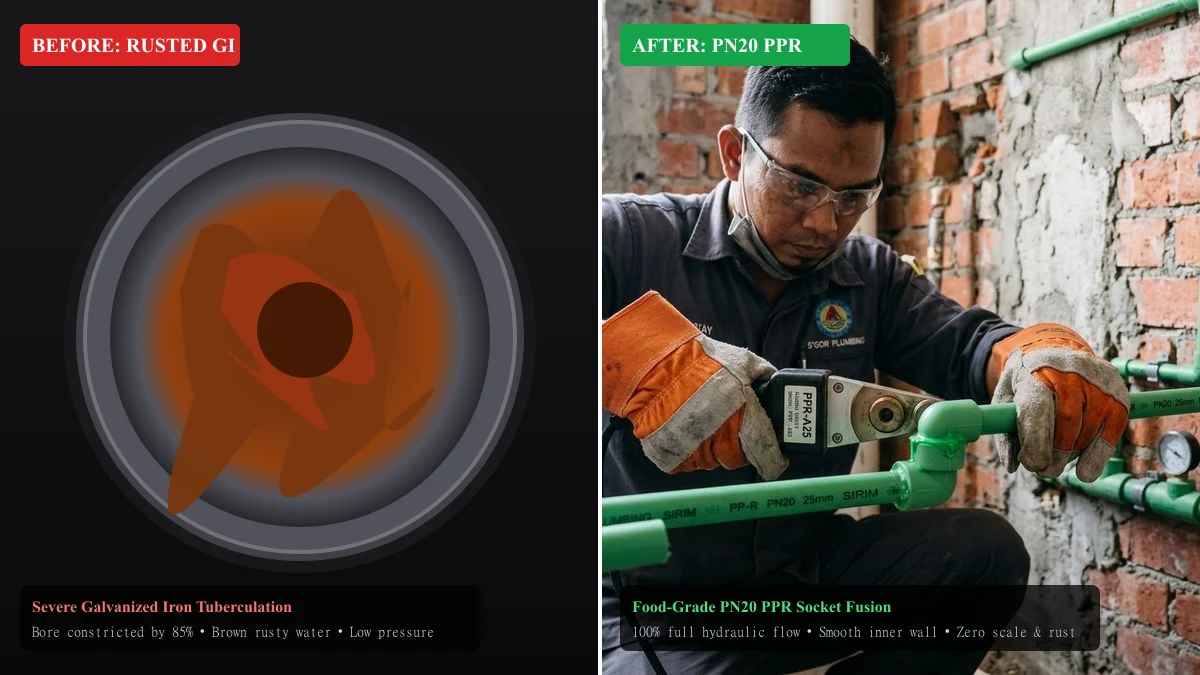
Where ground movement in Shah Alam stresses buried fittings, our technicians utilize certified green PN20 PPR socket fusion pipes and tough HDPE poly coils. Socket fusion welds pipe and fitting into a single seamless piece of material at 260°C, creating a joint that absorbs ground settling without snapping or leaking.
- PPR PN20 socket fusion creates a single continuous pipe with zero glued joints
- Rated for 20 bar pressure, comfortably handling Shah Alam municipal surges
- Food-grade SIRIM-certified material keeps drinking water pure and odorless
Simple Preventive Plumbing Checks for Shah Alam Homes
A few easy checks every few weeks help keep your water flowing smoothly, protect your tapware, and prevent surprise plumbing emergencies.
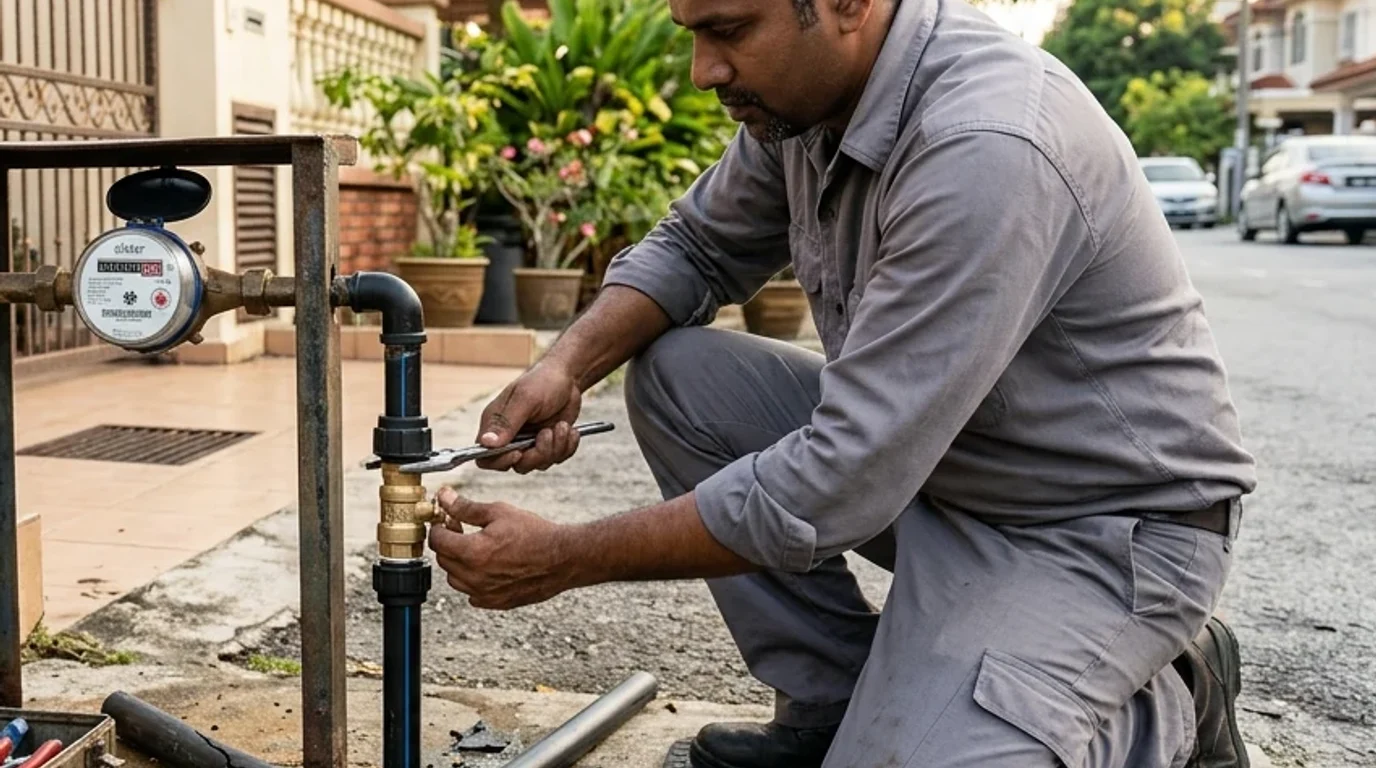
Monthly Water Meter Spin Check
Turn off all taps, showers, and washing machines inside your Shah Alam home. Walk out to your front water meter and look at the small red star or arrow. If it is still creeping or spinning, water is escaping somewhere in your pipes—call our local plumber to check it before your bill spikes.
Inspect Flexible Braided Hoses Under Sinks
Look at the flexible braided hoses supplying your wash basins and water heaters in Shah Alam. Under municipal water pressures averaging local municipal water pressure, aging hoses can develop tiny wire fractures or rubber bulges that should be replaced before they burst.
Watch for Sudden Tap Pressure Drops
In Shah Alam, where normal water pressure runs around local municipal water pressure, a sudden drop in water pressure at all taps often means Air Selangor is doing pipe work in your neighborhood, or an internal line requires attention.
Facing This Plumbing Issue in Shah Alam?
Our Seksyen 7 mobile dispatch team is available 24/7. Get an upfront quotation via WhatsApp with zero obligation and 90-day warranty protection.